
How to Store a Motorcycle Helmet: The Right Way to Protect It
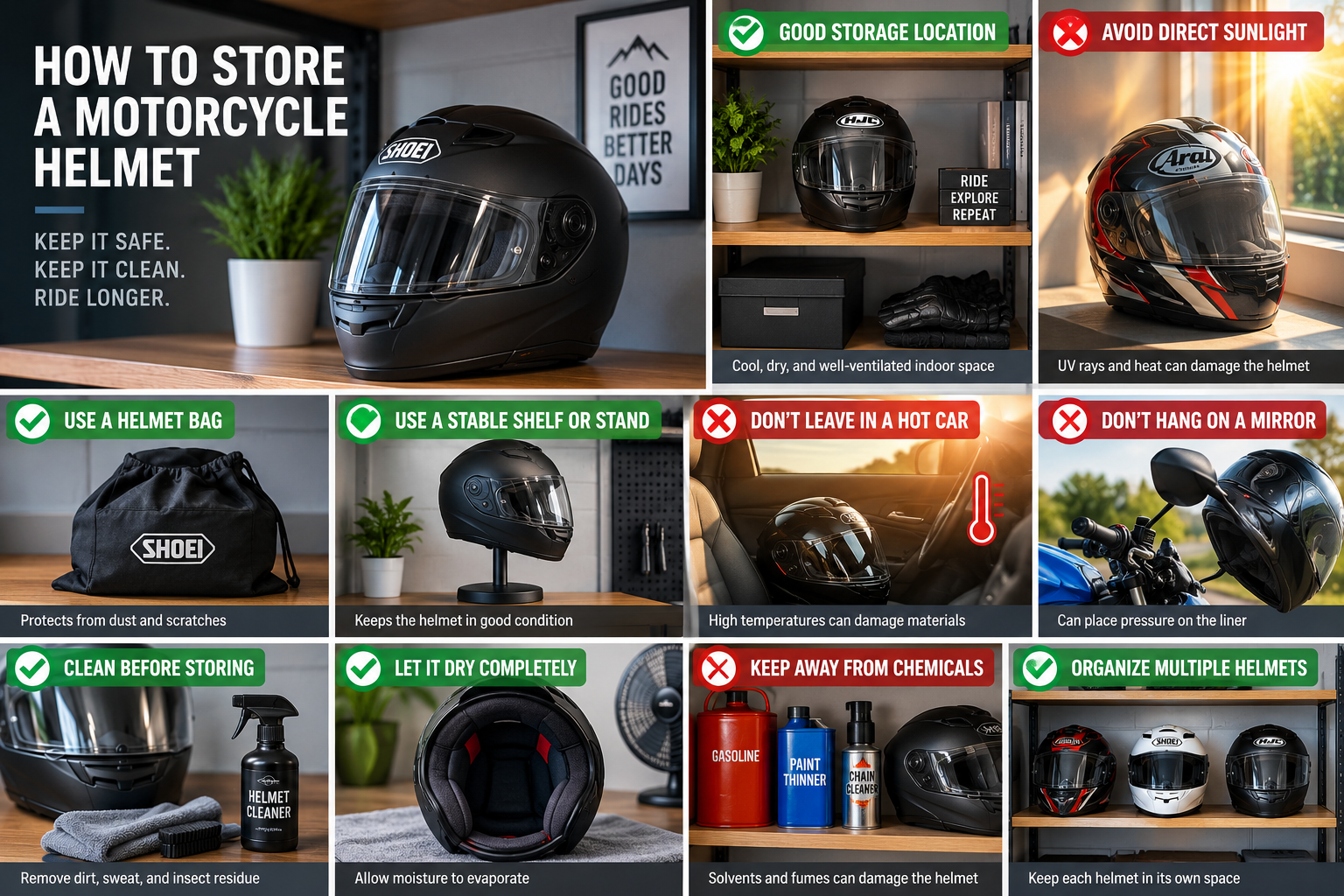
The best way to store a motorcycle helmet is in a cool, dry, well-ventilated indoor location away from direct sunlight, excessive heat, moisture, chemicals, pets, and anything that could compress or damage the helmet’s inner liner. Let the helmet dry after riding, clean it when necessary, and place it on a stable shelf or in an appropriate helmet bag.
A motorcycle helmet is one of the most important pieces of motorcycle riding gear you own. Yet riders often pay far more attention to choosing a helmet than to storing it correctly.
That can be a mistake. Heat, moisture, UV exposure, chemicals, impacts, and poor storage surfaces may affect the helmet’s shell, comfort liner, visor, and impact-absorbing materials over time.
In this guide, I’ll explain how to store a motorcycle helmet properly, where you should keep it after everyday rides, what to do before long-term storage, and which common storage mistakes you should avoid.
Read more: 10 Best Motorcycle Helmets to buy!
What Is the Best Way to Store a Motorcycle Helmet?
The ideal motorcycle helmet storage location has four important characteristics:
- Cool – away from heaters and excessive temperatures.
- Dry – protected from persistent humidity and water.
- Ventilated – allowing moisture trapped in the helmet liner to escape.
- Protected – away from sunlight, chemicals, pets, falling objects, and accidental impacts.
For most riders, a shelf inside a bedroom, closet, gear room, or climate-controlled garage works very well.
I prefer storing helmets on a wide, stable shelf rather than balancing them on narrow hooks or motorcycle mirrors. A shelf supports the helmet without concentrating pressure on the interior liner and also reduces the chance of the helmet falling.
What Should You Do Before Storing a Motorcycle Helmet?
Putting a helmet away immediately after a hot ride isn’t ideal. Sweat and moisture can remain trapped in the comfort liner, especially during summer riding.
My normal post-ride routine is simple.
1. Let the Helmet Air Out
Open the visor and place the helmet somewhere with good airflow.
If the liner is damp from sweat or rain, don’t immediately seal the helmet inside an airtight container. Allow the moisture to evaporate first.
SHOEI specifically recommends drying wet helmet interiors in the shade in a well-ventilated location. It also warns against exposing the liner to excessive heat.
2. Wipe Away Sweat and Dirt
After longer rides, lightly wipe the helmet’s interior and exterior if needed.
Arai recommends wiping residual sweat from the interior after riding. This is particularly useful if you’ve been riding in hot weather or use sunscreen or hair products.
3. Remove Insects From the Visor
Dried insects become harder to remove later.
I normally soften stubborn bug residue using a damp microfiber cloth before wiping it away rather than aggressively rubbing the visor.
4. Check That the Helmet Is Dry
Before putting it into long-term storage or a closed cabinet, check:
- Cheek pads
- Crown liner
- Chin curtain
- Chin strap
- Ventilation areas
These areas can retain moisture even when the shell feels completely dry.
Where Should You Store a Motorcycle Helmet?
There isn’t one perfect location for every rider, but some locations are clearly safer than others.
| Storage Location | Recommended? | Why |
|---|---|---|
| Indoor shelf | Excellent | Stable temperature and easy access |
| Ventilated closet | Excellent | Protected from UV light and dust |
| Helmet cabinet | Excellent | Provides protection and organization |
| Climate-controlled garage | Good | Convenient if humidity and temperature are controlled |
| Helmet bag | Good | Protects against dust and scratches after the helmet is dry |
| Hot vehicle | Poor | Temperatures may become dangerously high |
| Direct sunlight | Poor | Heat and UV exposure can affect helmet materials |
| Motorcycle mirror | Poor | Can place pressure on the helmet liner |
| Damp basement | Poor | Humidity can encourage odors and mildew |
Should You Store a Motorcycle Helmet in a Helmet Bag?
Yes, a helmet bag can be an excellent storage option once the helmet is completely dry.
Many premium helmets are supplied with soft storage bags specifically designed to protect the shell and visor from scratches and dust.
A good helmet bag should ideally be:
- Soft inside
- Clean
- Breathable or reasonably ventilated
- Large enough not to compress the helmet
Avoid sealing a sweaty or wet helmet inside a bag for extended periods.
Doing so traps moisture inside the liner, potentially creating unpleasant odors and encouraging microbial growth.
Can You Store a Motorcycle Helmet on a Helmet Stand?
Yes, but the design of the stand matters.
A helmet stand should support the helmet without applying concentrated pressure against the EPS impact liner.
I prefer stands with a broad, rounded support surface rather than thin posts.
The helmet should also sit securely enough that a small bump won’t knock it onto the floor.
Avoid Narrow Hooks
A narrow peg or hook inserted deep inside the helmet can place unnecessary pressure against the liner.
The EPS liner is part of the helmet’s energy-management system, so I avoid using anything that could dent or deform it.
Can You Store a Motorcycle Helmet in the Garage?
You can store a motorcycle helmet in a garage if temperature, humidity, and chemical exposure are controlled.
A clean, insulated garage with a helmet cabinet can be perfectly suitable.
However, I would avoid keeping a helmet in a garage that regularly becomes extremely hot, freezing cold, damp, or filled with chemical fumes.
Keep Helmets Away From Chemicals
This is particularly important in workshops and garages.
Don’t store your helmet directly beside:
- Gasoline
- Paint thinner
- Solvents
- Strong cleaning chemicals
- Fuel containers
- Oil or chemical spills
Helmet manufacturers warn that petroleum-based chemicals and some solvents can damage helmet shells, plastic components, and impact-absorbing liners.
Should You Leave a Motorcycle Helmet in a Car?
Leaving a helmet inside a hot car is not recommended.
Vehicle interiors can reach extremely high temperatures when parked in sunlight.
SHOEI warns riders not to leave helmets in vehicles exposed to strong sunlight or places where temperatures exceed approximately 50°C / 122°F, because excessive heat may damage the shell, plastic components, or impact-absorbing liner.
Bell similarly recommends keeping helmets in a cool, dry location and warns that high temperatures can damage helmet materials.
Therefore, a car trunk or cabin might be acceptable temporarily under moderate conditions, but I wouldn’t use a parked vehicle as permanent helmet storage.
Can You Leave a Helmet on the Motorcycle?
Leaving a motorcycle helmet outside on the bike is convenient, but it isn’t a good long-term storage solution.
The helmet becomes exposed to:
- Sunlight
- Rain
- Dust
- Temperature changes
- Bird droppings
- Accidental bumps
- Theft
Another common habit is hanging the helmet over a motorcycle mirror.
I avoid this whenever possible.
SHOEI specifically advises against hanging certain helmets from motorcycle mirrors or handlebars because concentrated pressure can damage parts of the impact-absorbing liner.
A helmet lock may be useful during short stops, but once I’m home, I move the helmet to proper indoor storage.
How to Store a Motorcycle Helmet Long Term
If you aren’t going to ride for several weeks or months, preparing the helmet before storage becomes even more important.
Step 1: Clean the Exterior
Remove insects, dirt, dust, and road grime using cleaning products recommended by your helmet manufacturer.
SHOEI recommends using neutral detergent diluted with water for appropriate helmet components and specifically warns against petroleum-based cleaning agents.
Step 2: Clean the Interior
If your helmet has removable cheek pads and liner components, remove and wash them according to the manufacturer’s instructions.
Allow everything to dry completely before reinstalling it.
Step 3: Clean the Visor
Use visor-safe products or mild cleaning methods approved by the manufacturer.
Avoid aggressive household chemicals or glass cleaners unless your helmet manufacturer explicitly approves them.
Step 4: Allow Everything to Dry
This is one of the most important steps.
Never pack a damp helmet away for months.
Step 5: Inspect the Helmet
Look for:
- Shell cracks
- Damaged vents
- Loose trim
- Visor cracks
- Loose visor mechanisms
- Damaged chin straps
- Compressed or damaged EPS
- Worn cheek pads
Step 6: Place It in a Helmet Bag
A soft helmet bag helps protect the finish against dust and scratches.
Step 7: Put It in a Safe Indoor Location
Use a shelf or cabinet where the helmet cannot easily fall.
Keep heavy objects away from the helmet so nothing can fall onto it.
10 Motorcycle Helmet Storage Mistakes to Avoid
Most helmet storage problems come from a handful of common habits.
- Leaving the helmet in direct sunlight.UV exposure and heat are unnecessary when the helmet isn’t being used.
- Leaving it inside an extremely hot vehicle.Manufacturers specifically warn against excessive heat.
- Storing it while wet.Allow the comfort liner to dry first.
- Hanging it from a narrow hook.This may concentrate pressure against the inner liner.
- Balancing the helmet on a motorcycle mirror.The helmet can fall and the mirror may press into the liner.
- Keeping chemicals nearby.Gasoline, solvents, and other chemicals may damage helmet materials.
- Putting heavy objects on top of it.A motorcycle helmet should never be used as a shelf.
- Leaving gloves inside a damp helmet.Sweaty gloves can increase moisture and odor.
- Allowing pets access to the helmet.Bell specifically mentions protecting stored helmets from household pets that may chew them.
- Ignoring the helmet for months.Inspect and clean long-stored gear before riding again.
How Humidity Affects Motorcycle Helmet Storage
Humidity is one of the most overlooked storage issues.
The biggest everyday problem isn’t necessarily catastrophic structural damage. It’s often the gradual buildup of moisture, odors, and mildew in helmet padding.
This is especially noticeable in warm climates where riders sweat heavily.
After hot rides, I leave the visor open and let the helmet ventilate before putting it away.
Should You Use Silica Gel?
A small moisture absorber can sometimes be useful in a humid gear cabinet, but it should not replace proper ventilation.
I wouldn’t put loose chemicals or unknown moisture-control products directly against the helmet’s EPS liner or interior materials.
How Should You Store a Motorcycle Helmet Visor?
If the visor remains installed on the helmet, I generally leave it slightly open while the helmet is drying.
Once completely dry, the visor can be closed to reduce dust accumulation.
Replacement visors require more careful storage.
Keep them:
- Clean
- Dry
- Away from direct sunlight
- Protected from scratches
- Separated from sharp objects
A microfiber visor pouch works especially well.
If you use a Pinlock-style anti-fog insert, follow the specific manufacturer’s storage instructions because these inserts can scratch more easily than standard visors.
How to Store Multiple Motorcycle Helmets
If you own several helmets, dedicated helmet shelving is one of the cleanest solutions.
I like having one individual space for each helmet rather than stacking helmets together.
Recommended Setup
| Item | Recommended Setup |
|---|---|
| Helmet | Individual shelf position |
| Visor | Microfiber pouch |
| Gloves | Separate ventilated compartment |
| Helmet cleaner | Separate shelf |
| Communication accessories | Small organizer |
| Helmet bag | Folded beside helmet |
This approach keeps riding equipment organized while reducing scratches and accidental drops.
Should a Motorcycle Helmet Be Stored Upright or Upside Down?
For normal storage, I recommend keeping the helmet in its natural upright position on a wide, stable surface.
Turning a helmet upside down occasionally during cleaning isn’t necessarily a problem, but I don’t use the visor opening or shell crown as the permanent support surface.
The goal is simply to prevent unnecessary pressure, scratching, and instability.
Can You Put Things Inside Your Helmet?
I generally avoid using the inside of my helmet as a storage container.
Soft gloves are commonly placed inside helmets temporarily, but sweaty gloves introduce additional moisture.
Hard objects are worse.
Avoid storing items such as:
- Keys
- Tools
- Action camera mounts
- Metal hardware
- Locks
- Sharp accessories
These can scratch or dent interior materials.
Should You Store Your Helmet With the Visor Open or Closed?
After riding, leave the visor open or partially open while the helmet dries.
Once the helmet is completely dry and going into storage, closing the visor helps prevent dust from settling inside.
For long-term storage, I usually:
- Dry the helmet completely.
- Close the visor.
- Place the helmet in its soft bag.
- Store it inside a cool cabinet or shelf.
Inspect Your Helmet After Long-Term Storage
Before riding with a helmet that has been stored for months, give it a quick inspection.
Check:
- Chin strap condition
- Helmet fit
- Interior liner
- EPS liner
- Shell condition
- Visor mechanism
- Vent operation
- Communication equipment
If the helmet has been dropped, crushed, exposed to significant heat or chemicals, or otherwise damaged during storage, consult the helmet manufacturer or an authorized dealer before continuing to use it.
Does Proper Storage Make a Motorcycle Helmet Last Longer?
Proper storage can help prevent avoidable deterioration, such as UV fading, moisture buildup, liner odors, scratches, chemical contamination, and unnecessary heat exposure.
However, good storage doesn’t make a helmet last indefinitely.
Helmet manufacturers have their own replacement recommendations.
For example, Bell recommends replacement within approximately three to five years depending on use and condition, while Arai states that its helmets should generally be replaced within five years of first use.
Always follow the recommendations provided by the manufacturer of your specific helmet.
You can also see our guide on how often to replace a motorcycle helmet for a more detailed discussion.
My Recommended Everyday Helmet Storage Routine
For normal daily riding, there’s no need to make helmet storage complicated.
- Come home from the ride.
- Place the helmet safely on a stable surface.
- Open the visor and vents.
- Remove obvious dirt or insects.
- Let the interior air out.
- Allow damp padding to dry completely.
- Close the visor once dry.
- Place the helmet on a shelf or in a breathable helmet bag.
The entire routine requires very little effort but helps keep the helmet cleaner and more comfortable between rides.
Quick Motorcycle Helmet Storage Checklist
Before storing your motorcycle helmet:
- ✓ Make sure the helmet is dry.
- ✓ Remove sweat and dirt.
- ✓ Keep it away from direct sunlight.
- ✓ Avoid excessive heat.
- ✓ Keep it away from gasoline and solvents.
- ✓ Store it on a stable surface.
- ✓ Avoid motorcycle mirrors and narrow hooks.
- ✓ Protect the visor from scratches.
- ✓ Keep pets away.
- ✓ Use a helmet bag for long-term storage.
Frequently Asked Questions About Motorcycle Helmet Storage
What is the best way to store a motorcycle helmet?
The best method is to allow the helmet to dry completely and then store it indoors in a cool, dry, shaded location on a stable shelf or inside a suitable helmet bag.
Can I store my motorcycle helmet in the garage?
Yes, provided the garage remains reasonably cool and dry and the helmet is protected from chemicals, fuel fumes, excessive heat, moisture, and accidental impacts.
Should motorcycle helmets be stored in bags?
A soft helmet bag is useful for preventing dust and scratches. However, the helmet should be completely dry before being enclosed for extended storage.
Can I hang my helmet on a motorcycle mirror?
It is better not to. A motorcycle mirror creates a small pressure point against the helmet liner, and manufacturers such as SHOEI specifically advise against hanging certain helmets from handlebars or mirrors.
Should I leave my helmet visor open when storing it?
Keep it open while the helmet is drying. Once the helmet is dry, the visor can be closed to keep dust out during storage.
Can heat damage a motorcycle helmet?
Yes. Excessive heat can adversely affect helmet materials. SHOEI warns against exposing helmets to temperatures above approximately 50°C / 122°F or storing them in vehicles exposed to strong sunlight.
Can I keep gloves inside my motorcycle helmet?
It’s better to store them separately, especially after riding. Damp gloves can transfer sweat, moisture, dirt, and odors to the helmet interior.
Can I store a helmet upside down?
Short periods usually aren’t an issue when cleaning or handling the helmet, but for routine storage a stable upright position is preferable because it minimizes scratching and accidental pressure on the shell or visor.
Can a motorcycle helmet be stored in direct sunlight?
No. Long-term direct sunlight should be avoided. It exposes the helmet to unnecessary UV radiation and heat, which manufacturers specifically advise against.
How should I store my motorcycle helmet during winter?
Clean and completely dry the helmet, inspect it for damage, place it inside a soft helmet bag, and keep it indoors in a cool, dry location away from heaters, chemicals, sunlight, and moisture.
Final Thoughts
Learning how to store a motorcycle helmet isn’t complicated. The main objective is to protect it from unnecessary heat, UV exposure, moisture, chemicals, impacts, and pressure on the internal liner.
For everyday use, my preferred setup is simple: air the helmet out after riding, let it dry completely, and keep it upright on a protected indoor shelf.
For longer storage periods, clean the helmet first, allow every component to dry, place it inside a soft helmet bag, and keep it somewhere cool and dry.
A few minutes of proper helmet care can help preserve the fit, finish, comfort, cleanliness, and condition of one of the most important pieces of protective equipment you wear.
Sources & Further Reading

Daniel Carter | Motorcycle Gear Specialist & Helmet Expert
Daniel Carter is a rider and motorcycle equipment analyst specializing in helmet safety standards, protective apparel, and riding technology. He provides in-depth technical reviews and gear advice to help riders stay safe, comfortable, and fully equipped on every journey.
Editor & Author @ BestMotorcycleHelmet.com
1 thought on “How to Store a Motorcycle Helmet Safely: Complete Guide”
Comments are closed.